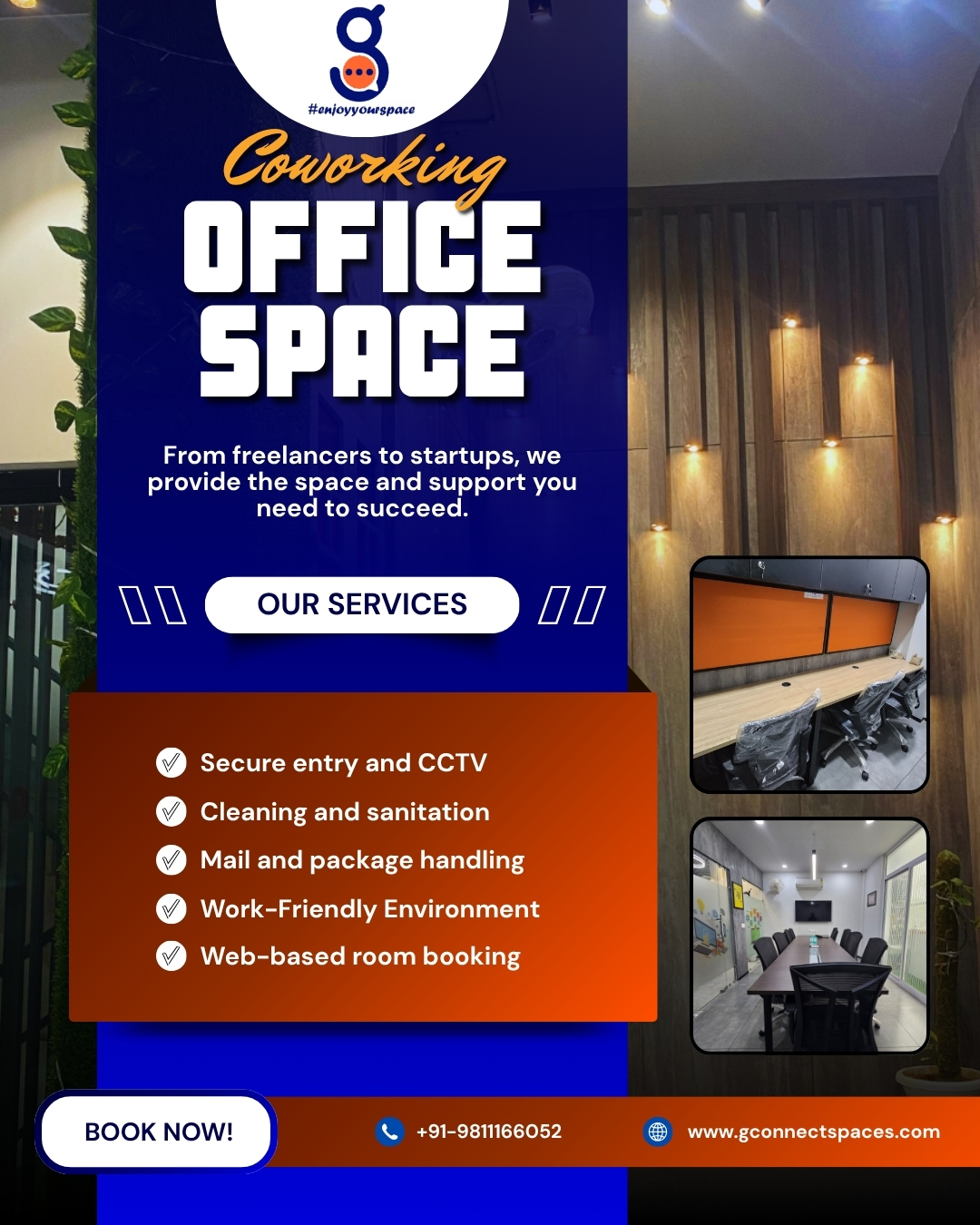
Why Coworking Offices in West Delhi Are the Smart Choice
In today’s fast-evolving workspace landscape, professionals are no longer bound by the need for a full-time leased office. For many startups, freelancers, small teams, and hybrid workers, coworking offices offer a powerful combination of flexibility, community, and cost-efficiency. West Delhi, in particular, is emerging as a hotspot for such shared workspaces — and for good reason.
1. The Growth of Flexible Work in Delhi
The rise of hybrid work models is one of the biggest drivers of coworking demand. As more companies shift to flexible working patterns, professionals are drawn to coworking offices that allow them to work close to home without sacrificing professionalism. According to industry reports, flexible workspace now accounts for a significant portion of commercial real estate transactions in Delhi NCR.
Moreover, real estate data from Anarock shows that coworking spaces are becoming a larger share of net office absorption: in Q1 2023, coworking made up ~27% of new office demand in India’s top cities. This reflects how coworking is no longer a niche but a central part of the office ecosystem.
2. West Delhi: A Strategic Location
West Delhi offers several advantages for professionals seeking coworking offices:
Residential proximity: Many working professionals already live in West Delhi, making daily commute easier when their workspace is nearby.
Affordable accessibility: Compared to prime business hubs, coworking offices in West Delhi can provide a more cost-efficient alternative, while still offering premium infrastructure.
Good connectivity: With metro lines and road networks, West Delhi is well-connected to other parts of the city, making it a convenient choice for local teams, clients, and remote workers.
This decentralization of coworking demand is supported by data showing that coworking spaces are spreading into neighborhood or non-central markets.
3. Business Benefits of Coworking Offices
Cost-Effective
Traditional office leases often come with high upfront costs (rent, security deposit, interiors, utilities). Coworking removes much of that burden because:
You pay only for the space you use (desk, private cabin, or meeting room).
Utilities, internet, maintenance, and housekeeping are often included.
There’s no long-term lock-in, which is ideal for startups or teams scaling up or down.
Reports suggest that coworking costs per seat can be significantly lower than maintaining a private office, especially when considering operational expenses.
Flexibility & Scalability
Coworking gives you the freedom to adapt:
Use hot desks for occasional working.
Opt for dedicated desks if you want a fixed spot.
Choose private cabins for small teams or more privacy.
Book meeting rooms on demand, only for the hours you need.
This modular approach makes it easier for companies to scale their workspace as their team grows or their needs change.
Professional Infrastructure
Even though coworking is flexible, it doesn’t compromise on quality:
High-speed internet, power backup, and ergonomic furniture are standard in most coworking offices.
Modern meeting rooms with audiovisual tools, whiteboards, and conferencing setups enable productive client meetings or team workshops.
Shared facilities (like printing, receptions, and lounges) make operations smoother.
Community & Networking
One of the biggest hidden values of coworking is community. Working alongside like-minded professionals — freelancers, entrepreneurs, or growing teams — fosters collaboration, knowledge-sharing, and networking. Studies also suggest that such collaboration can boost innovation and even positively affect business models.
4. What to Look for When Choosing a Coworking Office in West Delhi
If you’re considering a coworking office in West Delhi, here are key factors to evaluate:
Location & Accessibility: Is the space close to metro stations or major roads? How easy is it for your team and clients to reach?
Membership Options: Does the coworking provider offer flexible plans (hourly, daily, monthly) and the kind of setup you need (hot desk, cabin, meeting room)?
Amenities: Check for internet speed, power backup, meeting room availability, printing, and other necessary facilities.
Noise & Privacy: For client calls or focused work, you’ll want a space that balances openness with privacy.
Community: A good coworking space will have a culture of collaboration, events, and peer interaction.
Cost: Understand the pricing structure, what’s included in your plan, and whether there are any hidden fees.
5. Why Coworking Offices Are the Future for West Delhi Professionals
Hybrid work is here to stay: With remote work becoming more common, professionals no longer want to commute to central business districts every day. Coworking offices in residential or suburban areas like West Delhi provide the perfect middle ground.
Startups and SMEs see coworking as strategic: Instead of tying up capital in real estate, they prefer flexible, plug-and-play workspaces.
Cost pressures favor coworking: Especially for small businesses, reducing operational overhead is crucial — coworking helps optimize cost without compromising on quality.
Innovation and collaboration thrive: Shared workspaces encourage cross-pollination of ideas and help businesses grow faster.
Conclusion
A coworking office in West Delhi isn’t just a workspace — it’s a strategic choice. It offers affordability, flexibility, and high-quality infrastructure, all in a location that makes sense for both local professionals and growing teams. As the demand for hybrid work and decentralized offices continues to rise, coworking offices are becoming not just an alternative, but a preferred model.
If you're exploring coworking options in West Delhi, G Connect Spaces (or similar providers) could be exactly what you need: a space that blends flexibility, community, and professional infrastructure. Investing in the right coworking office can empower your team, reduce costs, and help you scale with confidence.